"My purpose was simple: to catch the feel, the pulse of rock, as I had lived through it. What I was after was guts, and flash, and energy, and speed" - NIK COHN -
------------------------------------------------------------------------------------------------------------------------------------------------------------------- "When the music was new and had no rules" -LUNA C
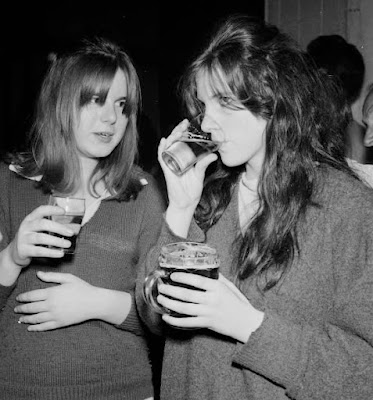
I love this whole other meaning the word "raver" had in the 1960s - basically a sexually wild 'n 'free young woman
The solicitous, condescending tones of the interviewer in this Man Alive report are something else
Simon Dupree and the Big Sound was the pop-psch band of Ray Shulman (A.R. Kane producer / mentor ) and his brothers - which then turned into the ultra-prog outfit Gentle Giant
This was SD & the BS's big hit
The Associates, under an alias - 39 Lyon Street - covered it
Via Droid, here's an 1989 pirate radio show on which Randall (RIP) talks about "jungle beats" - at about 3.55 mins into this clip.
The track playing is Renegade Soundwave's "The Phantom" - a beat later sampled by Omni Trio for "Stronger"
One thing I've found consistently is that whenever you think you can pinpoint the moment when a musical term or genre name gets adopted, you will always find an earlier example.... there's sort of new-word seep-backwards-through-time syndrome
It applies to almost everything
- grunge (used all through the 1980s and probably has earlier usages)
- grime (well, "grimy" was used by Onyx almost a decade earlier)
And don't get me started on "techno"....
Hell, I even found I'd coined neurofunk almost a decade earlier than when I affixed the term to a shit direction in drum and bass
Talking of funk... they used that in the 1950s, as a specifically musical term, in the context of jazz, hard bop and that end of the spectrum. (Obviously it had other meanings - including the completely non-congruent quaint-Brit Rudyard Kiplingesque meaning of "loss of nerve", "fearfulness" - as well as the connotatively proximate ones of body odour, sex-smell, etc)
"Indie" is another one.... color me surprised to see it pop up twice in Nik Cohn's Awopbop:
- describing
Apple Records, he says something that started out as the grand
Beatles dream of a free space for artists of all kinds, inventors, people
trying to do experimental happenings, etc, but then it shrank down to
being just an “indie record label”
- he
talks about Andrew Loog Oldham, manager of the Stones, starting his own
indie label Immediate Records. Admittedly quite a ways from what indie would
mean after punk – although only in his early 20s still, Oldham’s immensely
wealthy, a record business insider, lots of contacts, and through
Immediate signs up acts many of whom have hits. Doubtless it went through major label distribution too. So indie just means there’s
just one boss, the guy who founded it, calling the shots.
That said, I would be surprised to find if anyone used the term "arsequake" prior to the, well, Arsequake League
And I feel like "shoegaze" came out of nowhere, as did "trip hop".
The journalistic coinages seem to be more likely to emerge ex nihilo (not always though - post-rock as we know first used in 1967) whereas the ones that come from scenes and populations in an organic sort of way.... you will find more of a semantic prehistory...
From a George Melly article on contemporary styles of dancing, written for the New Statesman, spring 1962:
"An All-Night Rave at the Alexandra Palace"
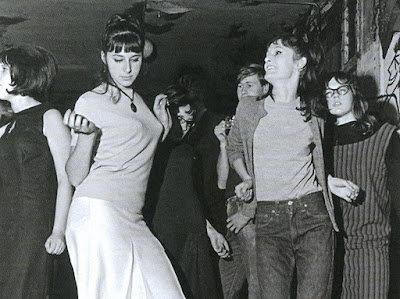
An all-night 'trad' ball held in the echoing and chilly infinity of the great hall of the Alexandra Palace. Band followed band from 9-30 PM until 7-30 AM the next morning. The audience were dressed almost without exception in 'rave gear'. As the essence of 'rave gear' is a stylized shabbiness, the general effect was of a crowd scene from a biblical epic. To describe an individual couple, the boy was wearing a top hat with 'Acker' painted on it, a shift made out of a sugar shack with a C.N.D. symbol painted on the back, jeans, and no shoes. The girl, a bowler hat with a C.N.D. symbol on it, a man's shirt worn outside her black woolen tights. 'Trad' dancing in the contemporary sense is deliberately anti-dancing. When I first went to jazz clubs, there were usually one or two very graceful and clever couples. But today the accepted method of dancing to trad music is to jump heavily from foot to foot like a performing bear, preferably out of time to the beat. I have no explanation to offer for this unattractive fad, unless it is to underline that they have no connection with the lovers of pop music, all of whom dance rather well in a somewhat mechanical way. Trad musicians have christened these self-made elephants 'Leapniks'.
And then in an old Newsweek article, reporting on the Beaulieu Jazz Festival.
Among their fans is a teen-ager who, holding a container full of cider, whisky and gin. said the last word on the trad boom recently on BBC TV: "If it really comes to it.'' said the traddist, "I prefer jazz to sex."
Redolent of the classic pill-popping born-again techno head who says they prefer raving to sex!
Tabloids confused about their youth categories - jumbling together leapniks and beatniks
Beatnik youth with surprisingly long hair (the guys) for 1960, but very mild mannered and sweet
"Raver's Edge" by Mick Mulligan (king of the ravers) and chums - including George Melly
Melly interviewed in 1959
Interviewer says: "Many people see the world of jazz as hysterical teenagers and dope cigarettes..."
"Rhythm is the only stimulus..."
Apparently ravers in the tradjazz sense still could be found in the 1970s, according to this Chris Welch piece from Melody Maker in 1972. (Unless it's some kind of spoof or parody of a trend watching field report).
History Is Made At Night posts a newspaper cutting that shows that "raver" and "ravers" was well established as the term for marauding mobs of hard-partying, up-all-night youngsters in the UK by the late 1950s
Here's the text, again heisted from History Is Made At Night:
40 coffee bar night spots- some of them dimly lit cellars were teenagers go on unlimited necking parties - have earned for the seaside town of Brighton this new title… It's ravers' top town.
The "ravers" are gangs of young people who travel from London on early morning milk trains to have a rave day and night whooping it up in the coffee bars.
Why ravers? Because they move around in a crowd not caring where, not caring why...
The dingy ill-ventilated coffee bars have one piece of equipment common to all. The juke box. To the canned music the teenage ravers jive themselves into a frenzy. As they jive they kiss. When they tire they lounge around often on the floor because there aren't enough seats.
And the necking goes on continuously. In London coffee bars necking is strictly forbidden. But no such prudery in Brighton. There the ravers can neck from 11:30 am to 11:30 pm and no one will tell them to calm it down.
When they have enough of one bar the rave starts up again and they move to the next spot. Often the ravers carry their own musical instruments and jive in the streets.
They are not popular with the Brighton police who will be keeping a special watch for them on bank holiday trains this weekend. Not long ago a trainload of ravers paraded to through Brighton streets at dawn, singing, jiving and waking sleeping people
(Sunday Pictorial, 29 March 1959)
The last line about "singing, jiving and waking sleeping people" reminded me of this '93 classic that hijacks Aled Jones: "we're walking in the air.... while people far below are sleeping as we fly". E makes of us angels...
An all-night 'trad' ball held in the echoing and chilly infinity of
the great hall of the Alexandra Palace. Band followed band from 9-30 PM until
7-30 AM the next morning. The audience were dressed almost without exception in
'rave gear'. As the essence of 'rave gear'is a stylized shabbiness, the general effect was of a crowd scene from a
biblical epic.To describe an individual
couple, the boy was wearing a top hat with 'Acker' painted on it, a shift made
out of a sugar shack with a C.N.D. symbol painted on the back, jeans, and no
shoes.The girl, a bowler hat with a
C.N.D. symbol on it, a man's shirt worn outside her black woolen tights. 'Trad'
dancing in the contemporary sense is deliberately anti-dancing.When I first went to jazz clubs, there were
usually one or twovery graceful and
clever couples.But today the accepted
method of dancing to trad music is to jump heavily from foot to foot like a
performing bear, preferably out of time
to the beat.I have no explanation to
offer for this unattractive fad, unless it is to underline that they have no
connection with the lovers of pop music, all of whom dance rather well in a
somewhat mechanical way. Trad musicians have christened these self-made
elephants 'Leapniks'.
from George Melly's Revolt Into Style - original source for this isan article he wrote in 1962 on trad jazz and dance crazes for the New Statesman
Now you are probably aware that "raving" / "rave" (as verb and noun) / "raver" go back as far as the 1950s and trad jazz - if not further
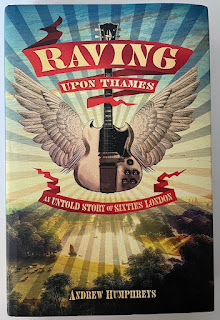
ViaPeter Stanfield's blog, news of a book by Andrew Humphries titled Raving-on-Thames - it's about Richmond - on the outer edge of West London - and its blues club scene at the very start of the 1960s.
There's a chunk of a letter from a 16-year-old American to her friend about her visits to Eel Pie Island:
"Wednesdays are good days. I go to my Island.... You cross a steep bridge over the river and pay a toll of 4d to an old lady called Rose. Then walk along a winding road with bungalows on either side. There’s lots of trees and its dark and mysterious. You turn a bend and see a large decrepit hotel and a crumbling façade. You hear loud blues music. Walk through the gates and you are in another world. All material cares disappear and we are the only people who exist.
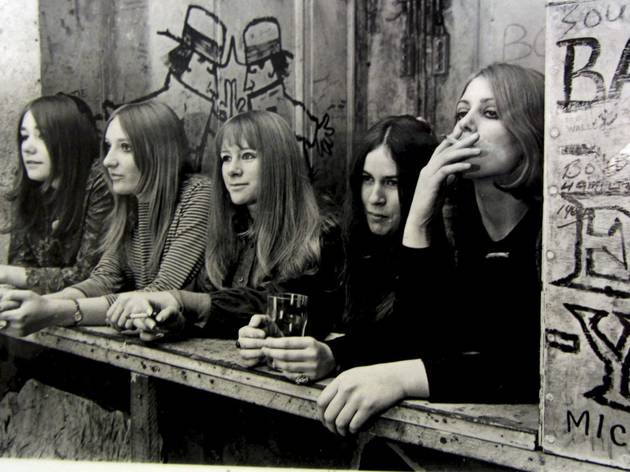
"There’s a large converted barn, you go down some steps after conning your way in with 6d – it’s usually 3/6d – your wrist is stamped and you go down. It’s very dark with just red and green lights. Long John Baldry is singing with his band at one end of the hall. The walls are white flaking and full of cobwebs, with cartoons, murals and names printed over them. People dance there crazily. Next door is the pub, where we and the musicians all congregate, we con drinks and play the jukebox and talk to everyone. I often go there on my own but always end up meeting someone I know to dance with.
"Outside there is a long strip of grass down to the river with large stone nuts and bolts lying around and convenient bushes where couples make love and smoke hash. It’s the coolest place in England, there’s nowhere else like it."
"Con" here being used to mean something like "blag" I guess
Instead of writing in 1960, the girl could be writing in 1990 or 1992 about Labrynth, or Konspiracy / The Kitchen, or dozens of other rave dens and warrens - all you'd have to do is to change a few details (sonic updates, drug differences, admission prices)
An old History Is Made At Night blogpost about Eel Pie Island, which links to another blogpost (sadly disappeared)
earlier rock use - the neighbours don't like the longhair singer's parties, "they've made it very clear they've got no room for ravers/ they stop me from grooving, they bang on me wall"
the same year as 'Sugar & Spice' (1967)
also
Around the same time, but also earlier
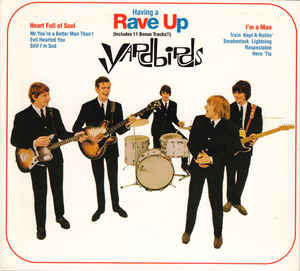
That's the Yardbirds innit - well of course they had the album with "rave" in the title
1965
But even earlier than that - rave was a buzzword on the trad jazz scene - all night raves, ravers, raving
According to George Melly, the term was coined by trad jazzer Mick Mulligan and his agent Jim Godbolt:
"Famous more for his Rabelaisian lifestyle than for the traditional jazz he played, Mick Mulligan was known as “the King of the Ravers”. The term “to rave”, meaning to party to excess, was coined by Mulligan and his agent Jim Godbolt, and slid into national usage."
According to Shady Old Lady blog, the term has a precise locus in space, if not pinnable down in time:
Location: 44 Gerrard Street, Soho, London
Description: This building, now at the centre of chinatown, has a startling musical history.
After World War 2, it housed the West End Jazz Club run by George Melly and the trumpeter Mick Mulligan. It was here that the first all night raves were held and also where the term was actually coined by Mulligan. Melly said:
At seven a.m. the band played its final number and we'd all crawl up out of the sweat-scented cellar into the empty streets of a Sunday morning in the West End. Hysterical with lack of sleep, accompanied by a plump art student, her pale cheeks smeared with the night's mascara, I'd catch the Chelsea bus and try to read the Observer through prickling red eyeballs as we swayed along Piccadilly, down Sloane Street, and into the King's Road. Then a bath, one of those delirious fucks that only happen on the edge of complete fatigue, and a long sleep until it was time to get up and face the journey to Cook's Ferry or whatever jazz club we were playing that evening.
In 1967 it became Happening 44, Jack Braceland's (a pioneering light show artist) a trendy psychedelic club. Pink Floyd, Fairport Convention and Soft Machine played here, but amazingly it closed down barely 4 months later."
I doubt though that Mulligan & Co plucked the word and its connotations out of thin air.
And indeed the etymology of the word is as follows:
rave (v.)
early 14c., "to show signs of madness or delirium," from Old French raver, variant of resver "to dream; wander here and there, prowl; behave madly, be crazy," of unknown origin (compare reverie). The identical (in form) verb meaning "to wander, stray, rove" first appeared c. 1300 in Scottish and northern dialect, and is probably from an unrelated Scandinavian word (such as Icelandic rafa). Sense of "talk enthusiastically about" first recorded 1704.
other meanings:
verb
To speak wildly, irrationally, or incoherently.
To move with great violence or intensity: The storm raved along the coast.
To speak or write with wild enthusiasm: Critics raved about the new play.
To utter or express in a frenzied or unrestrained manner.
to speak in an angry uncontrolled manner
(of the sea, wind, etc) to rage or roar
to enjoy oneself wildly or uninhibitedly
noun.
An extravagantly enthusiastic opinion or review: The play received raves.
A raucous party; a rave-up.
a fad or fashion: the latest rave.
"Rave" also appears in Ode on Melancholy by Keats connoting fury or inflammation of the spirit
No, no, go not to Lethe, neither twist
Wolf's-bane, tight-rooted, for its poisonous wine;
Nor suffer thy pale forehead to be kiss'd
By nightshade, ruby grape of Proserpine;
Make not your rosary of yew-berries,
Nor let the beetle, nor the death-moth be
Your mournful Psyche, nor the downy owl
A partner in your sorrow's mysteries;
For shade to shade will come too drowsily,
And drown the wakeful anguish of the soul.
But when the melancholy fit shall fall
Sudden from heaven like a weeping cloud,
That fosters the droop-headed flowers all,
And hides the green hill in an April shroud;
Then glut thy sorrow on a morning rose,
Or on the rainbow of the salt sand-wave,
Or on the wealth of globed peonies;
Or if thy mistress some rich anger shows,
Emprison her soft hand, and let her rave,
And feed deep, deep upon her peerless eyes.
She dwells with Beauty—Beauty that must die;
And Joy, whose hand is ever at his lips
Bidding adieu; and aching Pleasure nigh,
Turning to poison while the bee-mouth sips:
Ay, in the very temple of Delight
Veil'd Melancholy has her sovran shrine,
Though seen of none save him whose strenuous tongue
Can burst Joy's grape against his palate fine;
His soul shalt taste the sadness of her might,
And be among her cloudy trophies hung.
Also Dryden:
"He raves; his words are loose / As heaps of sand, and scattering wide from sense."
Van Morrison uses the term, connoting a holy folly of rapture, in this very non-rave-up, mellow 1983 song
bigging up not just Donne but Yeats and Whitman and Omar Khayyam and Kahlil Gibran
Rave on, John Donne, rave on thy holy fool
Down through the weeks of ages
In the moss borne dark dank pools
Rave on down through the industrial revolution
Empiricism, atomic and nuclear age
Rave on down through time and space down through the corridors
Rave on words on printed page
Rave on, you left us infinity
And well pressed pages torn to fade
Drive on with wild abandon
Up tempo, frenzied heels
Rave on, Walt Whitman, nose down in wet grass
Rave on, fill the senses
On nature's bright green shady path
Rave on Omar Khayyam, rave on Kahlil Gibran
Oh, what sweet wine we drinkin'
The celebration will be held
We will partake the wine and break the holy bread
Rave on let a man come out of Ireland
And rave on, Mr.Yeats
Rave on down through thy holy Rosy Cross
Rave on down through theosophy and the golden dawn
Rave on through the writing of a vision
Rave on, rave on, rave on, rave on, rave on, rave on