Showing posts with label ecstasy. Show all posts

Wednesday, May 29, 2024

White Dove Mourning

An interesting review of One Dove's Morning Dove White by Matthew Schnipper, as part of Pitchfork's Sunday Review series of belated reviews (in this case because the site didn't exist when the album came out in 1993). The score of 8.7 is higher than anything it would have received at the time.

At the time, the album was felt to itself be belated -  one of those anticipated albums that takes too long to be made....  (The delay came from a struggle with the record company, who pressurized them to put out more poppified version of the tracks, with radio-friendly mixes).

Reviewers in the UK as I recall felt the album, when it did arrive long after the initial buzz wave, to be underwhelming.... 

Certainly there didn't seem to be anything else on it as amazing as the single “White Love", which appears twice, in the Guitar Paradise Mix and as a reprise.


“White Love” stalled just outside the Top 40.

(They did have a small hit with “Breakdown” after the album’s release).

Listening again, I heard some really lovely tunes that sit somewhere between Saint Etienne and Seefeel – "My Friend”, "There Goes The Cure", “Transient Truth”.


A certain too-pure dream of perfect pop, a distillate of essences too rarified to survive the commercial rough-and-tumble of actual real-world pop…. meets dubby-clubby sounds… wisped through with ultra-breathy ethereal-girliness that places the group near shoegaze. (One reviewer described them as "Cocteau Twins just back from Ibiza").

Part of that Weatherall  moment in UK pop (wasn’t there an initiative called the 98 bpm Movement  slowing the music down from house tempo to a reggae-ish sway?... which would also make it a fellow-traveler with the Bristol sound. *


And then there’s Dot Allison’s voice….  Airy …. almost Medieval at times… a devotional sigh drifting through the cloisters of an abbey....  a sound that joins the dots between Lisa Gerrard and Kirsty Hawkshaw


“Whiteness” is the word.

Despite the dub and house elements, One Dove always seemed a supremely blanched sort of sound

Maybe that’s partly auto-suggestion, from titles like “White Love” and Morning Dove White

But it’s also Dot's pure-as-snow tones.


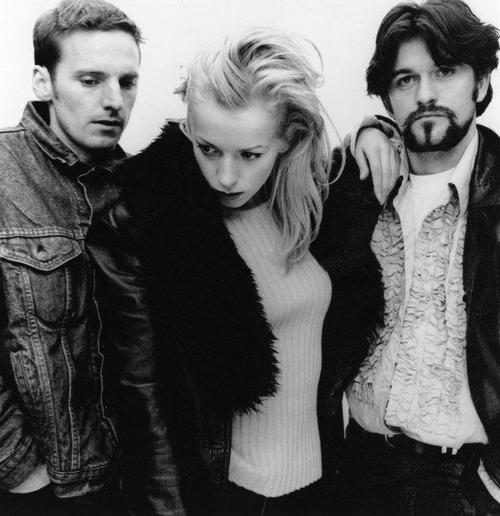
And it’s also the whiteness of Dot herself...

She looks like she’s made of snow...

A reminder that Scotland is nearer Scandinavia than the South of England.


Talking of the colour white

I can find no confirmation of this out there, but I continue to believe – I wish to believe – that the group are named One Dove as a sly nod to White Doves: an Ecstasy pill of ultra-blissy repute... the kind of pill that makes veterans of a certain era go all “ooh gosh” wistful, pursing their lips and exhaling with the memory rush


                                       As well as "White Doves", there were also Pink Doves and Speckled Doves. According to this drug awareness postcard, though, the Dove wasn't among the highest of MDMA content pills around then.  Perhaps it was just uncut with other things like speed, so it was a purer, cleaner sort of 'classic Ecstasy' lovey-dovey feeling. 


White Dove / "White Love"

Morning Dove White / White Dove Morning…. 

This was music for the afterglow… that 6AM dawn-after-the-rave feeling…. no one around… the city deserted and silent… and you tingling still...  feeling translucent… unbodied... hollowed out by ecstasy

And then the other druggy connotation of “white” would be the “whitey” – a white-out... swooning,  fainting, falling on the floor ….  a pill too strong… or one pill too many

The chorus in “White Love” -  if you can even call that wordless gaseous shiver-shudder a chorus -  sounds like a whitey.... an internal avalanche of bliss...  a deathgasm.

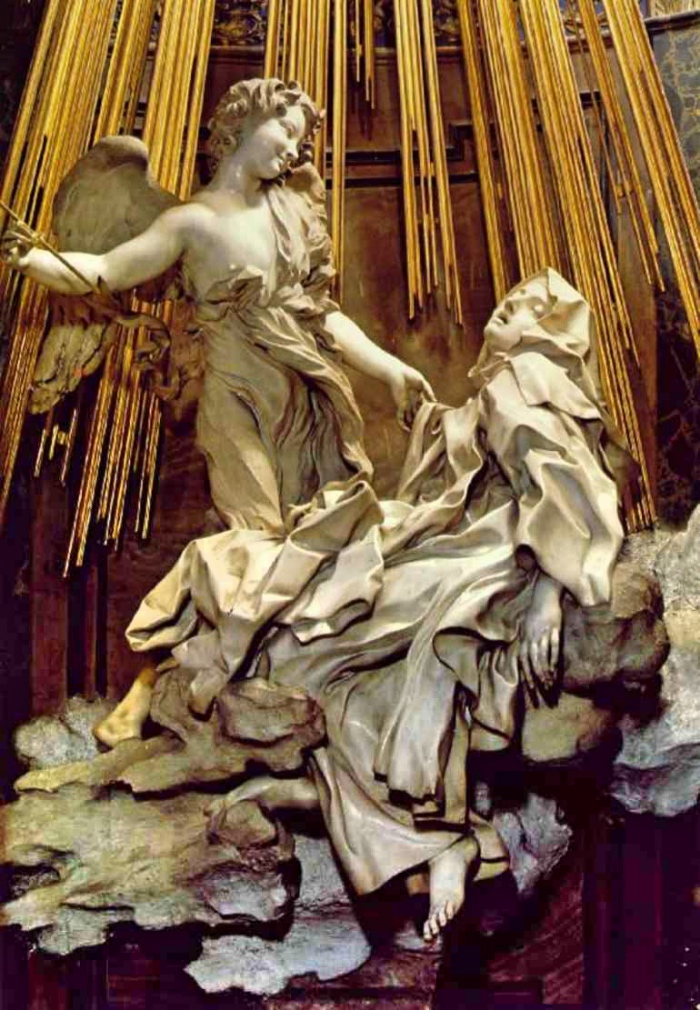
A voice coming, and coming – apart at the seams. Saint Teresa in the throes.**  

Sampled as opposed to sung, this kind of erotic-cosmic oozy-woozy feeling was all over rave tunes  of the era - wordless diva cries and moans, looped into bliss-spasms -  like Shades of Rhythm’s “Sound of Eden”. 


The bliss-spasm isolated / intensified even more on this tune by Pseudo 3


That's where the track titles, the sound, and the look (not just Dot's complexion and hair, but on the album cover she's dressed in white too), all these things converge - a meld, or braid, of spiritual and  erotic.  

Songs like sexy psalms


The idea of "purity" seems to nestle somewhere beneath all this - pure love, pure devotion, a pure dose, the perfect prescription. 

Edinburgh's techno temple Pure. 


The cover could be a morning-after-the-night-before tableau - Dot the sleeping beauty... unable to keep her eyes open, her head from drooping... the Other Chaps wasted and drowsy.

Talking of music for the afterglow....

One Dove's "Fallen" featured on this compilation from a few years ago put together by Bob Stanley and Pete Wiggs: Fell From the Sun: Downtempo & After Hours 1990-91

A whole bunch of 98-bpm-or-thereabouts tunes described by the label by the label as "comedown downbeat, sunrise indie-dance and woozy morning moods".

 Tracks like The Grid's "Floatation", BBG's Satie-laced "Snappiness", The Aloof's  ‘Never Get Out Of The Boat’, Sheer Taft's "Cascades (Hypnotone Mix)", Moodswings's "Spiritual High".


The comp's timespan – 1990-91 – shows how past-their-moment One Dove were when they finally dropped Morning Dove White in 1993. 

Fell From the Sun fits the Icarian theme of having flown too high, starting to crash... a still glowing ember.  ("Higher Than The Sun" by the Primals is on there). 

The compilation's title though appears to come from the Opal song, as also recorded by Pale Saints. (The latter's name fits the blanched-by-bliss theme).


Not on the Fell from the Sun comp but partaking of the vibe of that time 


That Creation / indie-dance / post-Madchester / UK house nexus 


Afterglow is the name of the first of Dot Allison's - six? seven? -  solo albums.


I did a little interview with her around it for Spin. 

"I Wanna Feel the Chill" was one tune that stood out on a record that otherwise felt a bit subdued by its own good taste.  The eerie guitar lick is sampled from Tim Buckley's "Dream Letter." 


"Chill" - in either of its meanings - again shows an understanding of her thematic matrix.

Exaltation of Larks, from 2007, is another evocative title.

Her latest album Consciousology is on the shoegaze label Sonic Cathedral. 


* Well, I could swear someone telling about a 98 Bpm Movement started by Paul Oakenfold.... but it must have got mangled in the memory: Movement 98 was in fact a Paul Oakenfold project, centered around Carroll Thompson's vocals, and which scored a small UK hit in 1990 with the mid-tempo soul of "Joy and Heartbreak", with melodic elements borrowed from Satie's "Les Trois Gymnopedies".


Odd fact: Rob Davis, formerly the guitarist who wore women's clothing in Mud - was involved as a writer. Later he would make millions as the co-writer of Kylie-smash "Can't Get You Out of My Head".

**
Teresa of Ávila, 16th Century mystic  - a nun of noble birth, she became famous for her visions and raptures (sometimes involving levitations). Jacques Lacan, French Freudian theorist, wrote about Bernini’s sculpture of Teresa. Malcolm Bowie, paraphrasing Lacan, writes about “an unlocalisable and ineffable pleasure-spasm” that inspires Teresa’s enraptured contortions. 


Monday, May 8, 2023

toytown tekno 1 of ?


The naughty naughty joke here is that "Rhubard and Custards" were red and yellow capsules of Ecstasy very popular in '92.


The pills were described warmly by a nostalgic raver on the Discogs thread  as "very rushy!"

That might be because they had amphetamine and methamphetamine in them as well as a decent amount of MDMA, at least according to this late '90s medical journal article


Wednesday, December 28, 2022

Decadance

My piece on Hou Hsiao-hsien's Millennium Mambo, a 2001 film partly set in the club scene of Taipei.  The piece also looks at the struggles that movie-makers have had with capturing what happens on the ravefloor - and why they've evaded it for the most part. It's for  the journal of The Metrograph cinema in New York, where a restored version of the film is currently showing as part of a Taiwanese New Wave series


Wednesday, March 17, 2021

"the endless pump"


descriptions of drugging 'n' dancing from Geoff Dyer's wonderful novel Paris Trance 

(not actually a novel about trance music I hasten to add)

(although Geoff did pen this nice short Guardian piece on psy trance's visual aesthetics


Friday, August 21, 2020

The Mad Fuckers (flowers in the dustbin)


"Where "WFL" focuses entirely on the sensation of being a drugged member of a drugged dancefloor, Flowered Up's "Weekender" documents both the hallucinatory delirium and the sociocultural framework that both explains and ultimately contains it. ("WFL" might itself have been intended as a component of such a broader vision; the Bailey Brothers had originally been approached by Happy Monday's label Factory Records to work on a movie project about Manchester provisionally entitled The Mad Fuckers). A 15 minute mini-movie that follows a hard day's night in the life of a working class London youth called Little Joe, "Weekender" is a mélange of traditional "gritty Brit" social realism (Joe eats his dinner while his mother neurotically twirls her wedding ring on her finger and silently watches TV, its screen reflected in her spectacles; Joe smokes a spliff in the grim hallway of concrete tower block of flats; the sordid sex-and-drugs squalor of a nightclub's lavatory, seen in a overhead pass that peeks down into each cubicle in a row of toilet stalls); trippy dancefloor commotion; heavily symbolic fantasy/hallucination sequences; and urban derive (Joe, still in the Ecstasy haze, wandering the deserted metropolis in the grey pre-dawn hours). Think Ken Loach filtered through the prism of MDMA....

"Like Happy Mondays, Flowered Up were a rock band inspired by and caught up in the frenzy of British rave culture in its early years; despite its remix by DJ Andy Weatherall, "Weekender" is therefore more a rock song about the joys and anguishes of the rave lifestyle than an example of where dance music was at in 1992. Still, Wiz's screenplay and script preempts the basic narrative arc of all the clubbing-and-drugging movies and fiction that followed in the Nineties: having the time of your life and then paying for it, flying high and crashing hard. The film is both a documentary snapshot of early Nineties London clubland (listening to pirate radio, going down to Quaff Records to pick up the new house imports and rave flyers) and a more timeless statement about British proletarian "weekenderism": the "workhard/play harder" life-cycle that goes back to the pill-popping mods of Sixties London, via the Northern Soul fans of the Seventies with their obscure sub-Motown singles and amphetamine wraps, and the jazz-funk and soul All-Dayers of the early Eighties. Both song and video pay homage to The Who's mod movie Quadrophrenia: there's a sample of the film's hero telling his boss to take his job and stick it where the sun don't shine, and Little Joe is picked up by a friend driving a mod-style scooter.

"More eloquently than Flowered Up's crudely expressed and sketchy lyric,Wiz's scripted dialogue lays out both the exhilaration and the impasses of the raver's lifestyle:Joe's feelings of limitless power and possibility ("when I'm out with my mates, and we're all one on, buzzing off our nuts, all together, it feels like we could... like we could do fucking ANYTHING!") versus the eternal return of Monday "like a jail on wheels" (to quote The Clash), the comedown to a reality with all its limits intact and un-altered ("I used to feel like that when I was young, but look at me, I'm still cleaning windows,"responds Joe's older, wiser, and wearier workmate).

Unlike his mother and his equally crushed, domesticated sister, jack-the-lad Joe is determined to out-run his inevitable fate (mediocrity) for as long as he can, fueled by music and drugs. The most striking sequences in the video depicts him doing just that--a fantasy set-piece in which Joe sprints full-tilt inside the grooves of a gigantic 12-inch dance single, giggling with glee despite the malevolent stylus that is hard on his heels. Redolent of the set-pieces in Julien Temple's musical Absolute Beginners (his flawed version of Colin MacInnes famous novel about the early, just-before-mod days of British youth culture/cult of youth), this sequence vividly captures the sense of dance culture as both groovy and a locked groove. Adding to this sense of a loop,a deadening dead-end, is the image that opens and closes Wiz's mini-movie:Joe--gaunt, pallid, a devitalized ghost of himself, an ember of the disco inferno--descending the side of a huge office building in his window cleaner's pallet; literally coming down after the high.

"Focusing on the story of one face in the crowd (a Face in the Sixties mod sense: a figure "on the scene"), "Weekender" represents one attempt to circumvent the problem of techno's facelessness, its lack of a performance model or star glamour..."

excerpt from my Oberhausen Film Festival talk / Stylus magazine essay Seeing The Beat: Retinal Intensities in Techno and Electronic Dance Videos (2002)

Really unconvinced / turned-off by Flowered Up's first forays into "Southern Baggy"


 ... but came around to them, somewhat, with "Weekender" 

Northern sister songs to "Weekender": 


Tuesday, April 23, 2019

Freaky Dancing


Well now - here's a really cool thing that I've been meaning to do a post about for a while: The Quietus's new publishing arm, TQLC, has pulled together as a single volume every issue of the ravezine Freaky Dancing, which as the Happy Mondays-derived title suggests was the unofficial house organ of the Haçienda.  You can get it here.


Created by Ste Pickford and Paul Gill, the zine consisted almost entirely of comic strips, cartoons, illustrations and visual-led spoofs 'n' satires.


Starting July 1989, the duo gave it away free to punters queuing outside the Haçienda on a Friday.


It ran for 12 issues.


The eleventh issue came out in August 1990, by which point the Haçienda scene was souring in a miasma of drug excess and paranoia, gangs and guns. Which brought the hostile attention of the authorities - such as "God's Cop" James Anderton, the chief constable of Greater Manchester -  and ultimately led to the club's demise.


There was one final issue, in May 1994, when the Haçienda had a re-opening night, but that consisted of reprinted highlights from the original run of issues.


unfinished strip for abandoned Freaky Dancing revival issue, circa 1994 


Freaky Dancing: The Complete Collection is a marvelous document of a cultural moment happening in real-time - hats off to The Quietus for putting it out and Ste & Paul for doing it in the first place.

Oh and A Guy Called Gerald wrote the foreword.


I was about to say that one of my great regrets is never making it to the Haçienda.

But in fact, I did go to the Haçienda - just a bit too early!

In the summer of 1987, I went up to Manchester to visit a Monitor comrade who'd moved there. That night, we went to see Big Black, then doing their last tour ever, play in a small club. Afterwards, my friend suggested going on to the Haçienda. I think Dave Haslam was one of the deejays, but this was before the whole house thing kicked off - possibly just before it all kicked off. So the soundtrack was a mixture of indie-dance and assorted vaguely clubby music. It was an impressively large, yawningly cavernous kind of space; the crowd was lively; it was pretty full. But after the intensity of Big Black, it didn't really compete and so we didn't stick around long.

So I never X-perienced the The Haç at its height - or Thunderdome or Konspiracy or any of those clubs.

I really don't know why I didn't just hop on a train in those days, jaunt around the country, visiting various rave temples.


I was, however, a fan of Happy Mondays before they went full-tilt house-rave (and declined, musically, in my opinion).  As were many of us at Melody Maker - in fact we put them on the front cover in May 1987, ahead of everyone, and indeed prematurely -  at least in terms of them becoming a cultural phenomenon, which never seemed remotely likely at that point.


The "greatest poet since Yeats"...  eats... all sorts

Friday, October 25, 2013

at Playboy, Frank Owen + Lera Gavin (his missus) on Molly, bath salts, "e-tards", and the vain quest for the "real thing"

also featuring quotes from Mike Power, author of Drugs 2.0, "a compelling account of how the internet has revolutionized the global drug trade"

Power's remarks about how “unity, euphoria and sex will never go out of style” and "Molly has become hugely popular right now because it is in many ways the perfect drug for the times. We’ve never been so networked yet so disconnected" rub dissonantly up against gritty Owen/Gavin reportage from the recent, drug-death-tarnished Electric Zoo rave in NYC:

"One with pasty skin and a blond goatee briefly scanned his surroundings...  took a capsule out, split it and poured the contents into his water bottle. He shook the bottle vigorously and took a sip. He winced and gagged. “This tastes like ass,” he said. “But I’ll be tripping in no time.” Nearby, close to the entrance to the show, a young Asian man was lying facedown on the grass, humping the ground. He turned his head to one side and vomited. By this point Electric Zoo’s staffers were spraying the crowd with water hoses. Overheating is a major risk factor for molly users."

Talk of unity, collective intimacy created by empathogens, etc also rubs dissonantly up against the callous responses of fans pissed off because the final day of the rave is cancelled by the organisers and the city following two deaths:

"Honestly, I do not even feel for the people who died. This is fucking stupid. I paid so much money to go to this fucking festival. Just cuz a couple people are fucking dumb you ruin it for 10s of thousands! Fuck you Zoo!”


Thursday, September 19, 2013

history rEpEats

Dance explosion, fueled by euphoriant drug, is followed by messy phase when the drug is cut with adulterants and surrogates, leading to bad reactions and deaths.... confusion, excess, paranoia, recklessness and wrecked-ness.

Mixmag with a report on how MDMA powder aka Molly, the cult of which was based on its purity and reliability compared to Ecstasy in pressed pill form, is nowadays, almost inevitably, increasingly turning out to be adulterated or bogus, with thje substitute substances in most cases being the MDMA analogue Methylone.

"The Miami Herald reported that in just 12 months there had been a staggering 16-fold increase in seizures of methylone, while MDMA seizures had dropped off a cliff. In 2011, Miami police reports show drugs sold as Molly were seized and submitted for testing 207 times. The overwhelming majority – 190 – contained MDMA, while just 17 contained methylone. But in 2012... testing proved that 278 samples contained methylone, and just 59 contained MDMA"

Echoing the hardcore-era not-quite-E surrogate MDA, famously encountered in the notoriously intense "snowball" pills of the early 90s, Methylone offers a speedier, harsher buzz:


Methylone is fun, but I’d rather have MDMA for sure,” [Mark, a London-based DJ] says. “Methylone makes me sweat like hell, and gives me a tight jaw. The high isn’t as deep and is a shorter buzz. It can make you quite touchy-feely and even horny – it’s pretty good for sex, though most guys can’t come on it. But the thing I least like about it is that it leaves me wanting more, like coke. Also, methylone is a little more harsh on the comedown and leaves your heart beating quite hard, whereas MDMA doesn’t,” he says. “I wouldn’t be totally pissed off if I got some methylone for a night out, but I’d want to know what I had – and I’d want to pay less for it.” 

As an adulterant, it’s among the least bad things it could be, nowadays. Luckily, it’s not massively toxic and the dose range isn’t that different to MDMA – a standard dose is around 100mg, or a tenth of a gramme, much like ecstasy.

Other common adulterants in US pills and capsules include TFMPP, a vile drug that will make you feel wakeful, hot and restless, and 5-MEO-DipT, a powerful drug that should never be mixed with other substances as it can react badly and cause spasms.

The report is by Mike Power whose book Drugs 2.0 – The Web Revolution That’s Changing How The World Gets High is an in-depth exploration of modern drug culture and the rise of analogues bought and sold through the internet. More info here.


 More stories about drug induced badness and EDM  -- deaths at Electric Zoo in NYC; Australian festival plagued by overdoses

More about Methylone's "tweekier high" at EDM Tunes

Big question about how all this will affect EDM: is the music going to get darker, more twisted and febrile, more interesting?